Immunology & Autoimmune Disorders
How does a disease-associated HLA molecule select peptides?
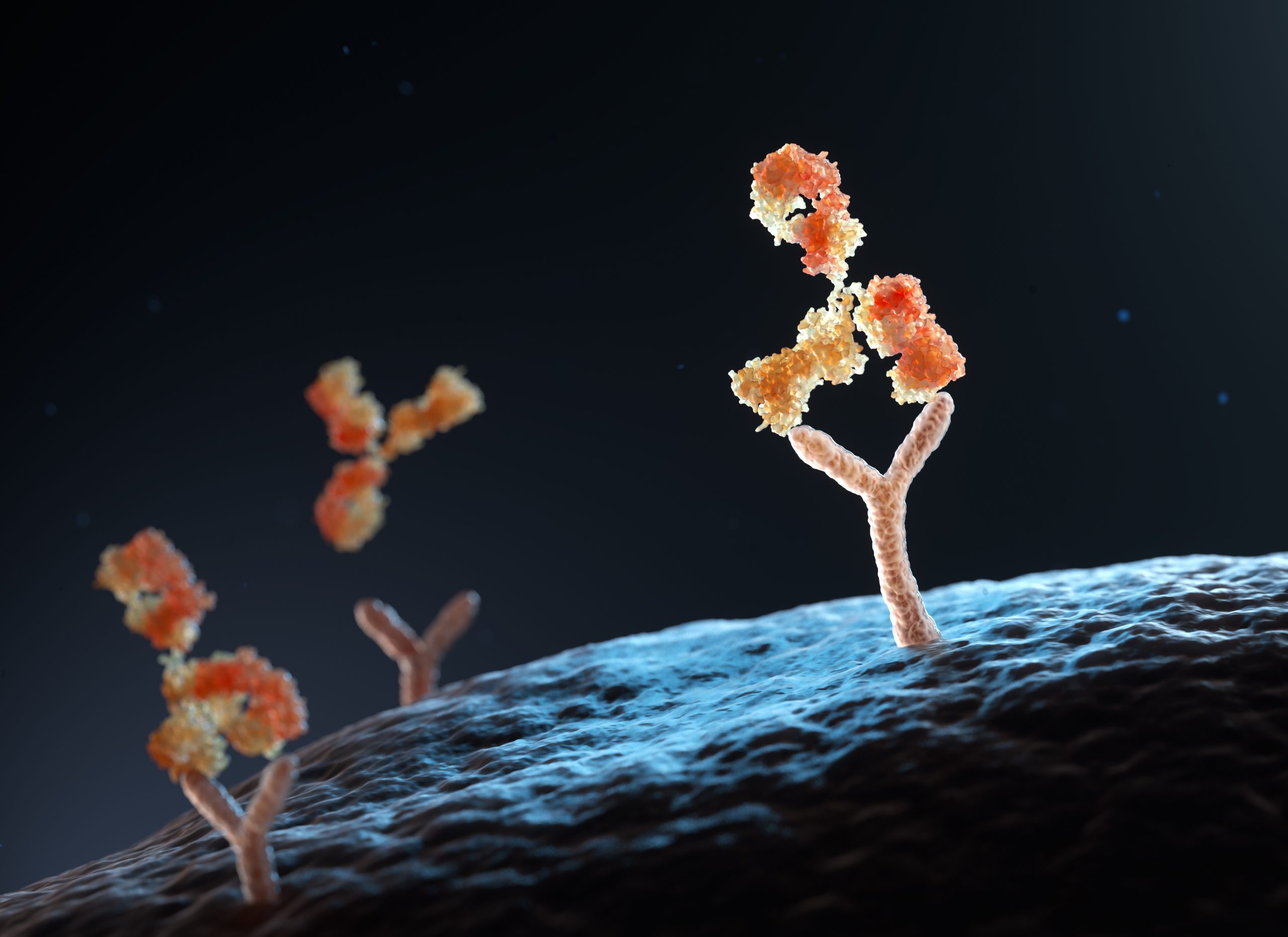
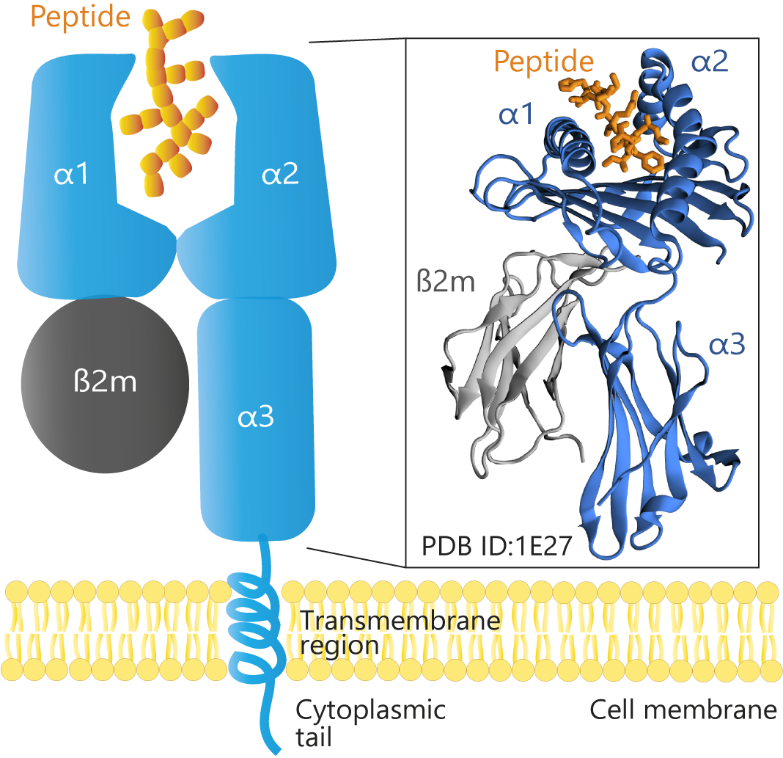
Class I human leukocyte antigen molecules present intracellular peptides at the cell surface for immune recognition. HLA-B*51 is strongly associated with Behçet’s disease, an inflammatory disorder, but a genetic association alone does not explain the molecular events that influence immune responses. We investigate how this molecule selects and stabilizes peptides, and how those interactions shape its conformational behavior.
Our approach examines the entire peptide-HLA complex as a dynamic system. All-atom simulations reveal how the binding groove accommodates different sequences, how interactions fluctuate and how peptide binding changes the motions of the complex. This links a disease-associated molecule to physical mechanisms that can be tested and compared across peptides.
Related studies: Gur et al. (2020), Molecular dynamics simulations provide molecular insights into the role of HLA-B51 in Behçet’s disease pathogenesis; Yilmaz et al. (2026), Mapping the peptide interaction fingerprint of the Behçet’s disease-associated HLA-B*51.

Mapping the HLA-B*51 interaction fingerprint
Our 2026 study mapped the interactions of 36 self-peptides bound to HLA-B*51:01. The simulations identified a conserved pattern of hydrophobic and polar interactions whose organization depends on peptide length. This interaction fingerprint explains recognition in terms of the chemistry and dynamics of the binding groove, extending the information provided by sequence motifs or a single peptide-bound structure.
The study also used simulated pulling to compare mechanical resilience under matched conditions. Nine-residue peptides resisted the largest forces, eight-residue peptides showed intermediate resistance, and ten- and eleven-residue peptides were less resistant in these calculations. This hierarchy describes the simulated mechanical response; it is not a direct measurement of immune activation or clinical disease severity.
Related studies: Yilmaz et al. (2026), Mapping the peptide interaction fingerprint of the Behçet’s disease-associated HLA-B*51.
From molecular recognition to disease mechanism
Our earlier work examined the dynamics of HLA-B51 in the context of Behçet’s disease. The more recent peptide-wide comparison builds on that foundation by identifying common recognition features alongside sequence-dependent differences. Together, these studies provide an atomistic framework for asking how a disease-associated antigen-presenting molecule distinguishes among its possible ligands.
Our continuing research direction is to understand and modulate molecular recognition in immune-related disease. We emphasize general principles of peptide recognition and protein dynamics while distinguishing this research goal from the published findings. This direction builds on established interaction patterns to ask how molecular recognition can be controlled.
Related studies: Gur et al. (2020), Molecular dynamics simulations provide molecular insights into the role of HLA-B51 in Behçet’s disease pathogenesis; Yilmaz et al. (2026), Mapping the peptide interaction fingerprint of the Behçet’s disease-associated HLA-B*51.